Early recovery
Safe, guided rehabilitation to support healing and reduce avoidable complications.

Physiotherapy Clinic
Postoperative rehabilitation
Helping you recover safely, regain function and get back to what matters to you.
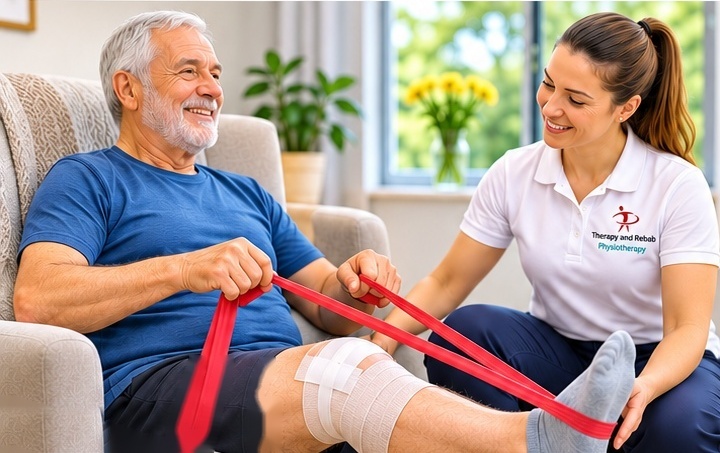
People who have had an operation and would like professional rehabilitation to help them:
Surgery is only one part of the recovery process. The right rehabilitation can help you work towards restoring movement, strength and independence. Your physiotherapist will consider the type of operation, your overall health, your current abilities and the advice provided by your surgical team.
We work with you to understand your goals and agree a programme that respects your operation-specific precautions and current stage of recovery.
Safe, guided rehabilitation to support healing and reduce avoidable complications.
Progressive exercises to restore movement, strength and independence.
Practical support to help you return to daily activities and your normal routine.
Advice and exercise to maintain progress and manage setbacks.
Your programme depends on the procedure you have had, your recovery, your medical history and the instructions from your surgeon or hospital team. Following an assessment, physiotherapy may include:
Support with getting in and out of bed, standing, transfers and walking where these activities are appropriate. We can help you practise movement safely within the guidance you have been given.
Exercises to work on joint or body movement where permitted by your postoperative precautions. The aim is to address stiffness and help you move more comfortably and effectively.
A graded exercise programme to address weakness and help rebuild the strength needed for daily activities. Exercises are selected and progressed according to your operation and recovery.
Where relevant, rehabilitation may include walking practice, balance activities, confidence with mobility and advice about walking aids or equipment.
Practising tasks that matter in daily life, such as rising from a chair, managing steps, getting dressed, preparing meals or returning to work and hobbies.
Guidance on pacing, exercise, positioning and managing activity between appointments, while following your surgical team’s instructions.
We provide physiotherapy and rehabilitation for patients following musculoskeletal and orthopaedic surgery. This may include rehabilitation following joint replacement, fracture or trauma-related procedures, and other operations affecting movement and physical function.
Please contact us to discuss your particular procedure and whether our service is appropriate.
The exact rehabilitation approach is always guided by your operation, your surgeon’s instructions and your individual assessment.
Physiotherapy does not replace postoperative review or advice from your surgeon, hospital or other healthcare professionals. Please continue to attend your planned follow-up appointments and follow the instructions you have been given.
If your symptoms or recovery raise concerns, your physiotherapist may recommend that you contact your surgical team or seek further medical assessment.
Your physiotherapist will discuss your operation and recovery so far, listen to your concerns and assess what is appropriate at your current stage. Depending on your condition and the instructions you have received, this may include:
We establish what you can currently do, what is difficult and what matters most to you.
Together, we identify practical goals that reflect your operation, health, daily routine and priorities.
Your physiotherapist selects exercises and functional activities that are appropriate for your stage of recovery and any restrictions.
Your progress and response are reviewed. The programme can be adjusted as your movement, strength, confidence and tolerance for activity change.
Therapy and Rehab offers clinic appointments and, where available and appropriate, home and community visits. The most suitable setting will depend on your mobility, clinical needs, location and the type of rehabilitation required.
Appointments are available in Leeds, Wakefield and Batley.
May be considered if travelling to a clinic is difficult or if practising daily activities in your own environment would be helpful.
Please have your discharge information, operation details and any exercise or precaution guidance available, if possible. Tell us about any changes in your symptoms or mobility.
This depends on the operation, your medical condition and the instructions from your surgeon or hospital team. Follow the rehabilitation advice you were given at discharge. If you are unsure when it is appropriate to begin or progress exercises, check with your surgical team.
Some movement or exercise may feel uncomfortable during recovery, but your programme should be appropriate to your condition and stage of healing. Tell your physiotherapist about pain, swelling or any unexpected response so the programme can be reviewed.
This varies according to the procedure, your health, starting abilities, goals and progress. Your physiotherapist will discuss your needs and review the plan with you.
Home and community visits may be available depending on your location, needs and appointment availability. Please contact us to discuss this.
We provide rehabilitation for patients following joint replacement and other orthopaedic procedures. Your programme will take account of the specific guidance and precautions provided by your surgical team.
Important information: This leaflet provides general information and does not replace individual medical advice, your discharge instructions or postoperative precautions. If you experience a sudden or severe deterioration, seek urgent medical advice.
Read or save the four-page patient information leaflet for this service.
Download the Physiotherapy Following Surgery patient information leaflet (PDF)
If you would like to discuss your particular procedure or whether this service is appropriate, please contact Therapy and Rehab.